About Me

My photo
A writer by predilection, an aunt by blessing and a friend by choice, Shelley has spent many years journaling before sitting down to draft her first novel. She has a B.A. in English discourse and is currently working on her third romantic-suspense, the title of which will be announced soon pending publication. Shelley is a member of the Romance Writers of America as well as her RWA state chapter of the Maryland Romance Writers.
"I love story-telling. It's a way to live an experience through the eyes of a character." - Shelley N. Greene

Sunday, May 3, 2015

BLADER GIRL


Last week’s post got me thinking about the hobbies; the activities that exercise your mind, body, and spirit.

          With summer around the corner, I wonder:

How hard it is to pick up a hobby after a long hiatus?

          Personally, I know it takes practice. I mean; I write, walk, and take pictures, but all of those activities have been constant endeavors for me. I keep up with the trends and technology where I rarely encounter a lapse. Or so I thought.

The other day, a friend mentioned to me that she’d taken up skating, the type of wheels—Rollerblades.

In a haze my brain shut down, re-booting with a barrage of teenage memories at the news. Rollerblading is special to me for personal reasons...

The dawn of Rollerblading emerged in the wonderfully weird 90’s, the decade in which I spent my teen years. A way for winter athletes to train year-round, the inline skate revolution was also like an evolution of quad roller skates; the neo-design seemingly specific to the culture of the time. Rollerblading belonged to the 90's and there appears to be a revival going on now.


This could be the future, who knows?

Roller skating in general was a breakthrough in the 60’s and 70’s— The image of James Caan in the movie ROLLERBALL springs to mind with a chuckle, but I can see how the sport could be projected onto a post-dystopian future a’ la THE RUNNING MAN. You can compare it to modern roller derby, which is badacle in its own right. There’s even a 90’s movie based on blading that hasn’t lost its awesome after almost twenty years.


HACKERS


Looking back, Rollerblading was all the rage by my junior year of high school, and it fit with collective ethos of the time. While all teenagers are rebels, I was a member of Generation X. It was the era of coffeehouse indie rock, clodhopper shoes, and pagers. A plaid button-down thrown over whatever you had on was the fashion staple (and still is today).

Proof that dial up was once badass.  (HACKERS movie)

Laptops were the wave of the future as was dial-up internet, and rollerblades evolved from California boardwalk recreation to a hip, urban form of transport.
         
          I wish a few of the trends would come back: Metallic jackets, skater Henley tees, layered tanks, and drawstring cargo pants.

That's what I'm talkin' about..

Back in the day, black and bright blue were my colors, and the transient 90’s fad of comic book neon and vinyl jackets were a dream come true.

Imagine this in blue. Wild, right? 

I was grateful that the clothes were comfortable and the conversation was intellectual. A shy kid, it was enough of a struggle coming out of my shell during those delicate, ego-forming years. It was just me and my mom then, we had little money but a lot of love. Summers were a frugal time when I had to find ways to entertain myself on a budget, and hopefully expel some energy in the process. I'd worked part-time job at a pet store where I'd earned extra spending cash, and things were good.

A few weeks into June a friend from school started spending long periods of time at the paved lake near us, talking animatedly about how she’d gotten a pair of rollerblades. As so many things were novelty, I listened to her stories but dismissed the idea of participating, sure that this new roller sport had an egg-timers wait to obsolete. But shortly into our friend's foray into the blading life, my best friend also got a set of blades, the two going to the lake together every other day.

At first I didn’t mind much, I had work to keep me busy, and I really wasn’t the type who had to jump on every new trend. But June turned into July and I watched from a distance as the Rollerblading achieved all the goals for summer:

·        Kept us out of trouble
·        Social time together
·        Outdoor workout
·        Burned pent up energy

I tagged along one time on foot to see what all the hype was about. The lake had a paved path around it with a roller hockey rink. My friends would take a few laps around the water to warm up and then spend hours practicing tricks at the rink. After scouting it out I was intrigued. The problem was that Rollerblades, the professional kind, cost upwards of $200.00, a small fortune for a family of two.

So I put the idea on my mental back burner, not telling my mom, with the hopes that I’d eventually forget about it. July dragged on as my friends got better and better, and my want for blades hadn’t diminished. I eventually broke down and put aside some of my work money for a pair of non-name-brand skates which turned out to be a huge mistake. I'd paid $50.00 and rushed the cheapo pair home, my mom noticing my infatuation as I tried them on. The wheel frames were steel, not plexiglass, which made them heavy as hell and clunky. The next weekend when I tried the bad skates out, I trailed so far behind my friends that they thought they’d lost me. I got so many blisters on my feet that I had to sit at work the next day, and of course, once used I couldn’t return the skates to get my fifty bucks back.

It was disappointing. And to top it off, I began to wonder if it were me or the equipment that had failed.

After the bum attempt, I didn’t try to skate again, and as the summer came to a close my mom picked up on my lethargy. I caved and gave her a full disclosure of my issue. I was afraid to tell my mom because I knew that she’d do anything to get me a real pair of skates, and I didn't want her to stretch our already meager budget.

One Saturday, Mom and I visited the sports store up at the mall and perused the selection. That’s when I saw them for the first time. With all the stereotypical fanfare that accompanies divine intervention; the clouds parted, rays from heaven shining down on a pair of dark purple, name-brand Rollerblades. The box had a distinct dent on one side, the European sizing chart an exercise in translation, where a try-on was required to see if they fit.

They did.  They were light and comfortable and…perfect.

Mom and I immediately took the skates to the layaway counter. I remember the sinking feeling in my chest as I reluctantly handed the box over to the store employee, as if I knew the parting was not “farewell for now” but “goodbye.”

Sure enough summer turned into fall and we couldn’t buy the skates. The time expired for the layaway and I avoided the sports store. I found evidence of my mom’s efforts to find a solution around our apartment; rollerblades circled in sales flyers, budgets written out on scrap pieces of paper.

My birthday passed in October as did Christmas, and I understood. It was too expensive, it couldn’t be done.

As I was my pre-New Age self then, I didn’t yet know about Creative Visualization but I’d utilized the primal form of the belief well—pining. I’d lay in bed and dream of how fast I’d be if I had those purple skates. I imagined how happy I’d be…

Winter made for a nice distraction because everyone was indoors, but I knew that spring would bring with it a little heartache, my purple skates surely sold to some lucky girl. February rolled around and one cold afternoon after work I wandered to the east side of the mall, a strange intuition luring me into the sports store. I walked in thinking I must be masochist, strolling past the Rollerblade racks. A flash of purple sitting under a sign that read “70% Off – Clearance” caught my eye, my neck cracking from the force of turning so fast. 

My first response was It couldn’t be. The same skates COULD NOT still be here six months later.

I picked up the box, my fingertips finding the tell-tale dent in the side. I proceeded to have a happy-dance like seizure in the middle of the aisle. They were my skates, the same pair. Approaching the store clerk I learned that the skates were lost in the stock room after their return from layaway. As a clearance item they couldn’t be reserved again, but using every ounce of charm I had, I got the guy to make an exception and take the box off the floor for twenty-four hours while I rushed home. In an incoherent torrent I relayed the turn of events to my mom.

My blades were marked down, a total of $68.19 with tax.

My mom beamed a smile at me as she held up a rebate check that had come in the mail for $70.00.

I started to cry. Straight-up wept.

My mom had to take my arm and lead me to the car. We got to the store ten minutes before they closed. The checkout clerk looked at me like I was nuts as I clutched the box to my chest as if they’d have to surgically remove it in order to get to the barcode. I don’t recall the ride home at all, I was so excited.

I spent the following months learning about the skates, how to rocker the wheels for stunts, how to stop without the brake.

When May finally came I stood at the mouth of the trail, shifting my weight from left to right. There was one fleeting second where I thought, “What if I went through all this and I’m still no good?”

It was that moment when my friend said something like, “Going to keep up this time?”

I shot her an impish smile. Then I took off and never looked back.

That summer was the best of my life. I bladed every day, all day. I developed amazing tone in my legs and the overall cardio was incredible. I learned spins, jumps—all without a helmet.

I know.

As the saying goes, “Before you are old and wise you must first be young and stupid.” With the scars to prove it.

My beloved purple Rollerblades lasted me fifteen years before rain water from a leaky car trunk took them up to skate heaven.

To this day my mom and I refer to those blades as our miracle.

Santa Monica Beach, CA - 2000


So when my colleague told me about her new skates I must of gotten a faraway look on my face, the memories strong.

Summer is approaching again and everything feels like a repeat of the past. I need to watch my budget, but having fun is imperative, too.

Expel a little energy…

The first excuse I gave myself was that I’m too old, what if I can’t pick it back up again. But the very words make me a hypocrite.

Wasn’t it me that just last week spouted, “You’re never too old to try something new.” Or, "Old made new again."

Never limit yourself.  Life is short.


Wear bright blue.


Pin your hair up in girly poofs.


Throw a plaid button down over your tank top and cutoffs.


Go out and BLADE.


With rogue thoughts rolling, I let out a sigh that was part surrender and part elation. I did my homework, checking out the features before adding them to my digital cart. After I checked out, I opened Outlook and started a new email to Rollerblade customer service.  


Shelley, Rebooted  :)


Subject Line: "How to rocker the wheels on a new pair of Macroblades"


-         SNG


Monday, April 27, 2015

THE NICHE

The writing life is tough sometimes. It requires imagination, solitude, and determination. 

I described the feeling to a friend just the other day:

You sit down at the computer for long stretches of time, working the language, getting the voices and images to align – it’s exhausting in a good way. You feel spent in a good way, that’s when you know the work was done right. When you get all the energy out.


It’s the same with taking pictures. It takes lots of time and set up, but the final product is worth it.

At my last Maryland Romance Writers meeting, the guest speakers shared “A Day in the Life,” talking about their schedules and how they get the writing in; each of them different. One was a morning drafter, another hitting their stride after lunch, and the patterns got me thinking.

What makes a person choose this hobby/profession?

As a story-teller and a natural observer of people, I love to ask others their stories: How did you meet your spouse? How did learn your line of work?

My all-time favorite question is “Where did you learn your hobby?

          I get such interesting responses to that one, each person’s experience a journey.

          When people dabble with forms of art they discover their passion, and in such specialized fields.

          Years ago I had a work colleague who played the guitar. He practiced all the time, even when his wrist began to bother him with signs of carpel tunnel. When the pain got too bad he began to give strings lessons, he loved the music so much.

It reminds me of the moral:  If you can’t do – TEACH.  

          Continue to give your faculty back to the world.

Lucky for my colleague his wrist healed with enough rest and he did play again, but after he’d passed his wisdom on to a new generation of guitarists.

          Happenings like that make it seem as if the Universe has a plan. That our challenges are just temporary detours, a way for us to contribute

          I see it all around me. Last year my in-law became deeply involved in a new hobby. While on YouTube one day he saw a tutorial on how to craft men’s paracord bracelets. The geometric patterns in the knots fascinated him, and now he’s not only created a catalog of intricate styles, but he also builds the wooden jigs needed to make them. It’s amazing how every part of the process utilizes his eye for color, pattern, and ingenuity. Some of his bracelets take hours to create, but he pours his energy and thought into each and every piece.

          It’s a fitting skill. A conglomeration of his talents.

It’s fascinating, the ways in which artisans specialize their craft. It’s as if they start with a beloved interest and whittle the aptitude down a funnel of personal preferences until they end with a special skill.

A niche.

          And from Broadway to Esty.com, I just gape at all the creativity. I mean, where does someone learn how to turn words from a favorite book into a necklace? How did a lighting tech come to learn their craft? The voice narrators in audiobooks, what made them want to work in a sound booth versus out in the center of the stage?

          Some people have a flair for drama but don’t like crowds, and the alchemy of those habits turns into something extraordinary.

          I’ve said it before, never write off your weirdness, it could be your gift.         

          Another example came just the other week when I’d attended a yarn party with friends. My girl posse is skilled at knitting and crochet, so they planned the night out as a way to get together. I’d tried crochet a few times when I was in my teens, and could pick it back up if I applied myself, but as writing is my shtick I was just there for company and social support. The yarn store had a work room and I walked around the front area, admiring the finished samples of gloves and hats that you could make if you took the store offered classes. One intricate, gray cowl tempted me to try my hand at knitting even though it involved a complicated looking back stitch technique. 

       Our group talked while everyone but me worked, the subject turning to a private company in Canada who hand-dyes yarn. A popular commodity for organic knitters, hand-dyed wool yarn is expensive and time-consuming to produce, the scanes selling for upwards of $58.00. The yarn makers were local and gave tours illustrating the process.


            My friend’s mom had visited their site, urging me to check it out someday.    
     
           “It’s beautiful how it works, they have these huge vats of vegetable based dyes, and they hang the wool yarn out to dry. They had the most beautiful red color I’d ever seen.” 

And even though I don’t knit or crochet, I'd like to see that – the lines of multi-hued, hand-dyed wool strings drying in the breeze. I want to ask the couple how they learned that amazing skill. What an adventure that would be.

It’s exciting to hear the story – the path someone followed to their passion.

It encourages me to try new things. No matter your age, you can learn something new.

          A writer and picture-taker by predilection, there’s no reason I can’t explore, and stand in awe of someone else’s art. Who knows, maybe my next heroine will dye yarn for a living. That’d be awesome.

         The possibilities are endless when you’ve found your niche.


-         SNG 


Sunday, April 19, 2015

PATRIARCHS, CASTES, AND BROWNIES


            Hi all. I know what you’re thinking, “It’s been a year, what kind of blog continuity is this?” I humbly apologize for the delay.

  I have an unpredictable ebb and flow to my writing, but I strive to give you something worth waiting for…

          I have been journaling a lot as of late in reflection of life events, changes mostly, things that have opened my head and my heart. Even with all that to keep me preoccupied I have book two in the forefront of my thoughts every day.

In all stories, the premise is never new, and I'm sure that book two’s concept of an uptown girl is a trope that has been retold many times in songs, poetry, and in books. It’s not meant to be formula, but you can route it back to some fairy tale, somewhere. And as with all art it’s the telling of the story that makes it special.


A quote from the movie THE TRIP comes to mind:

Rob: “You should write about it…write about the food.”

Steve: “No. It’s been done. That’s been done before.”

Rob: “It’s 2010, everything’s been done before. All you can do is do something that someone’s done before, but do it better or differently.”

         
          This applies to all creative pursuits: writing, acting, comedy, music, dance, you name it.

          And while I don’t consider myself a word virtuoso, I have been circling my story, examining it from all angles, to find what is unique about it and go from there.

          In romantic fiction the conflict is what keeps the lovers apart, and in my book the social status has to be strong enough wedge to divide my two characters. My girl comes from a different world, one of money and structure.

Big shocker, right?

There a million books out there where the heroine’s motive is no more than the stereotypical need to rebel for love. The rich girl goes for poor boy.

**back-of-hand slap against forehead**

“I’m so repressed by the class systems that have held me back all these years!”

          I know, the nausea needs to stop.

I’m not saying that wealth and affluence is all fun and polo. I’m sure there a wellspring of internal and external pressures that comprise a great conflict from which the heroine wishes to break free. Within reason.

Here I’m going to touch back on my A_Z Challenge blog post, THE UNUSUAL SUSPECTSDefy the stereotype.

In fiction, not all the rich fathers have to be the dogmatic, oppressive types.

I’ll even play Wealthy Dad Devil’s Advocate: Let's say that rich father has kept a roof over our heroine’s head as well as clad her in couture all her life. The heroine has thus benefited from the best education, and more opportunities than other kids because of her father’s financial stability. While that may make dad controlling, that needn’t make him hateful.

And keeping in tune with my astrological theme, the earth element contains the signs Taurus, Virgo, and Capricorn. They’re the practical, money conscious, worker bees. They’re the slow-climb-to-the-top achievers. The long-road-equals-big-results-in-the-end people.

Capricorn males are the cardinal image of patriarchs, the male figures that represent the head of the family, the man of the house; the shoulder daughters and granddaughters can always cry on.

This theme conjures up personal memories for me. The reminiscent smell of cherry tobacco in particular, like my grandfather's pipe. Billows of smoke used to waft around him when he smoked, infusing his clothes. My grandpa was a college professor, a teacher of teachers, and a kindred spirit. From the time I was a toddler we’d been thick as thieves. He had dark curly hair, the same texture as mine, and he used to kneel down when he’d talk to me, mono e nieta, about the importance of keeping the head-thatch brushed before it started to resemble a bird’s nest. My sister and I would wait patiently at the kitchen table while he made us waffles, asking us what toppings we wanted in a Donald Duck voice.

In my eyes, my grandfather held the answers to every question in the Universe, and in his embrace there was protection from all harms.

I want the heroine in my story to come from this same base of reliability and realism. She is the epitome of the earth element, so she has a strong father.

          So, now I have to twist the backstory with my hero, of course.

          Yes, I’m a bully – it’s in the author job description.

          My poor, sweet, hard-working hero has to come from a place of lack, his father figure missing, or absent. He must become a man without the luxury of an instruction manual of life, as sadly so many young males are forced to do nowadays...

          My hero’s experiences are deep for that reason, it’s heart-breaking. He has to do all the work without immediate reward. He has earn his man card with the industriousness of his actions. But that’s the earth element for you. The incentive isn’t worth it unless it’s earned.

          And here is where real life for the writer comes into play. For as imaginative as I am, it’s hard for me to envision a lifestyle that I don’t live every day. From all outward appearances, my heroine has it good. I’m tempted to call her spoiled. But from my side of the fence the grass can look pretty green for those who have the comfort of a disposable income. It looks like my heroine has it easy, but in reality, one never know the struggles of others.

          And a person’s beliefs are their most powerful influence. Belief can unite or isolate. Beliefs are the basis of peace and war, of reason and distrust. Most of what people believe are based in their memories. Fiscal hardships, dysfunction, betrayal, lack of support or opportunities, all of it can skew one’s mental view of the world.

It can certainly alter the definition of what it means to be mature and responsible.

When I think of adversity my mind goes to the lines of separation in culture, particularly the walls built by socio-economic status – a huge theme in my story.


The concept takes me back to an event that happened while I was attending community college:


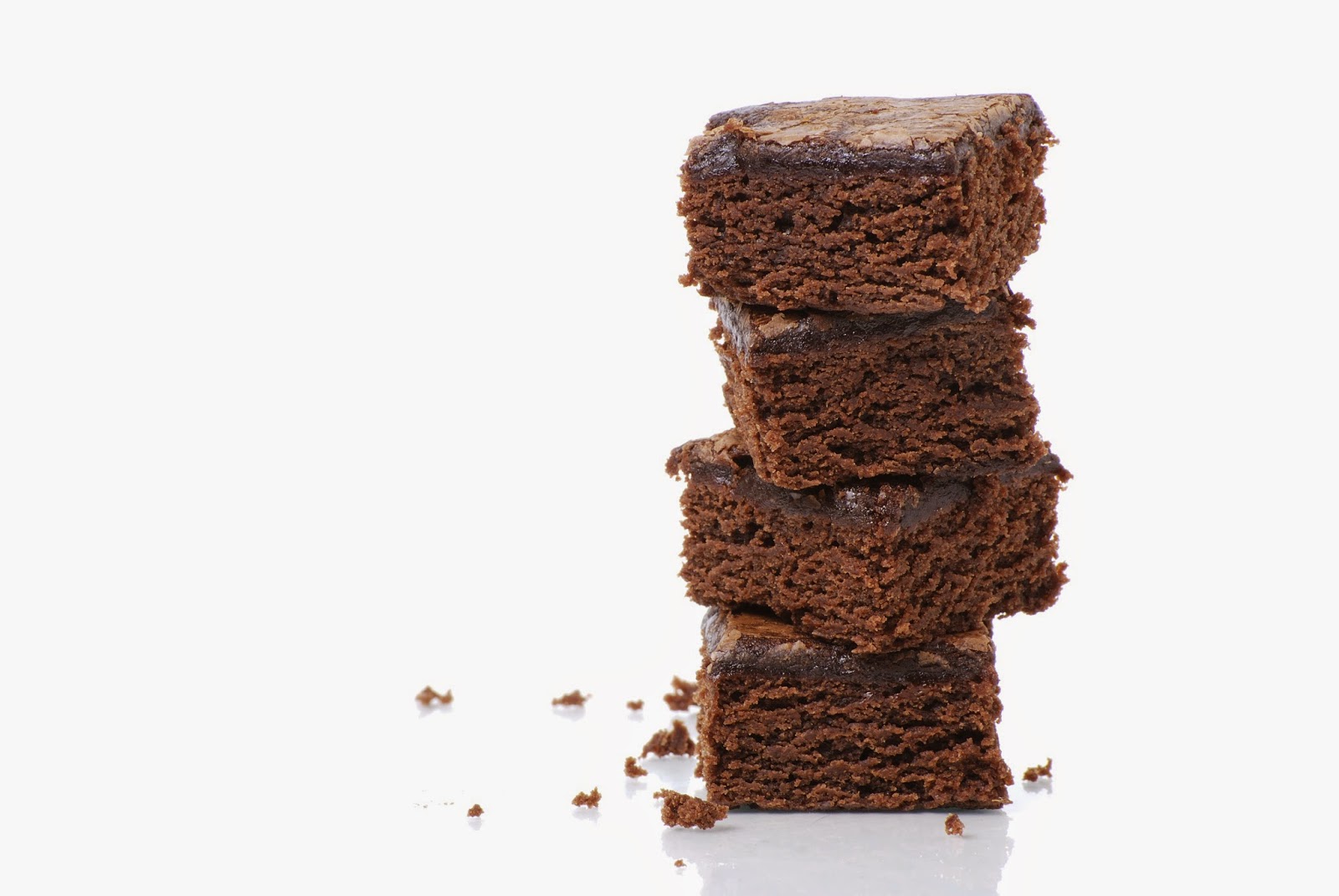
          It was the middle of summer, the grey sky outside a hot contrast to the cool lingering air within the room. Students from an array of ages filed into the classroom as my Women’s Studies teacher stood at the front, a variety of non-standard education equipment anchoring her desk; the odd lot including a pan of brownies, a thin roll of masking tape, and a piece of paper with numbers on it. She asked us to sit down quickly, but to “not get too comfortable.”

          Once at our desks, she shook a bowl full of little, folded pieces of paper; doling out the slips, one to each person, as she informed us that we’d be conducting a social experiment that evening. When directed, I unfurled my piece of paper, the word “Middle” scratched out in blue ink. Confused, I looked up to see our teacher running the tape from one wall to another, cording off areas of the space. Enlisting help, she directed us to push a certain percentage of the rooms’ contents into the various sections, the center lot the largest, then getting progressively smaller.

          When all the allotments where arranged we waited for an explanation, the lesson clearly more interactive than one any of us had seen before.

          “Today we are talking about caste systems, specifically, socio-economic class. Basically, how much money you make, and where that tier ranges in the US system.”

          Our teacher described it impartially, the differences in how someone raised poor had a certain chance of achieving a higher level of earning, based on their background, education, and a ratio of other factors. The paper on her desk outlined the current breakdown of earners in the United States at that time: 


Poor – 13%                             -        The homeless, jobless and impoverished.

Working Poor – 26%              -        Earn less than $20K annually, on welfare.

Middle Class – 47%                -        Majority of  workers, basis of US economy.

Upper Middle – 11%               -        Below wealthy, six-digit annual earners.

Affluent – 3%                          -        Elite, small percentage earning the most.


          She did the math, splitting our group into the same factions by way of random selection (the drawing of the slips). Each group was given the amount of resources that they would receive in real life, each caste allotted their “tier.” I was one of the sixteen students in the middle class caste, the blue-colored worker, the same tribe I called home every day. Three people were deemed Poor, five Working Poor, six Upper Middle, and the remaining two brandishing the golden label of Affluent.

In collaboration we divvied up everything around us, the desks, the books, and the space, the masking tape barriers keeping us corralled in our places. The purpose of the brownie became clear, as that too was to be “paid out” by percentage. The Affulent got everything first; 67% percent of the room, furniture, and textbooks. The girl representative for their caste had scooped out such a bulk of the brownie that I’d given up hope of there being any left.

The three Poor students didn’t even fit in the space calculation, and were told to wait out in the hallway. The six Upper Middle milled about the back-left corner of the room, away from the deliberation and noise, and within minutes I'd forgotten they were there. I remember the two Affluent by how comfortable they got so quickly, lounging on top of the tables that were pushed together, unencumbered by any constraints, eating their fill of brownie with plenty to spare.

          My group stayed in the Middle Class in every way. Our percentage of classroom space hovered around 21%, the sixteen of us huddled together with just enough room for us to fit shoulder-to-shoulder, the sardine routine only uncomfortable when someone had to move, or God forbid, sneeze.

          The moment of reckoning came when it was our turn for brownies, the remaining fragment of chocolate seeming pathetically small, and that was before the Working Poor got their portion.  

          I remember the moment clearly, our teacher coming over, presenting the pan to us as a group, as if bidding us to elect a leader. No one stepped forward though, and we continued to stand still, not moving, careful to maintain the peace of our unit. Staring at the food square, my eyes began to see a pattern, a grid. And something snapped. I ducked the tape rope, mindful to not jostle my neighbors. My teacher stared at me as I carried the brownies over to her desk and asked for a knife. Looking back I realize how much trust my colleagues had given me, watching without objection as I darted off with what was our collective "capitol".

          I kept my hands steady as I cut, turning the four-by-four inch brown remnant into sixteen equal, bite-sized pieces. I’d even left some extra frosting for the folks after us, thinking that my group’s rations looked fair, no one receiving more than another.

          Pan in hand, I traveled the circumference of the tape fence, ensuring that each of my Middle Class brethren got their treat before retrieving the last sliver of chocolate for myself. The class exercise required that we stand in our castes for fifteen minutes, and admittedly the wait was far more bearable after the brownies. While the sixteen of us Middle Class chewed, we slowly loosened up in our close confinement. After we were done eating, we started to converse, keeping still while turning our heads to nod and show acknowledgement to one another.     

          After a few more minutes our teacher called an end to the experiment, the Poor kids coming back in as we returned the classroom to its previous layout, but the revert did not clear the air. I could tell something was different. That the atmosphere had changed in the room somehow.

          The rest of the lecture flew by in a blink as the period came to a close. Students stood, gathering their books in unison. I froze when my teacher called out to me, asking me to stay after class. My natural sense of duty flaring, I got nervous as the room emptied, my mind running over the events of the evening.

          Did I make a mistake? I wondered.

          The lesson seemed objective, a review of societal statistics. I silently hoped that my deviation with the brownie didn’t cost me any grade points, but I didn’t see why that would be an issue.

          “You did well tonight,” my teacher said, her smile reassuring as I approached her desk, still worried that I’d thrown some kind of wrench into her lesson plan. I watched as she packed up her materials, stowing the tape and papers into a long-handled, canvas bag while balancing the now empty brownie pan on top of her arms.

          “I got it,” she said when I beckoned to help, ushering me toward the door as she clicked off the lights. “That was a fun, wasn’t it?”

          “Yes. It makes you think,” I replied as I followed her into the hallway.

          She paused. “Do you know how many times I’ve taught that lesson?”

          Confused, I shook my head. “No. How many?”

          She let the bag dangle in hand, the weight registering.

“Twelve times,” she said, her eyes catching mine, her gaze direct.

          “Really?” I felt my brow furrow, waiting for a reprimand that didn't come.

          She smiled again, the expression softening her face. 

          “Twelve times I've taught that lesson, and you are the first person to share the brownie.” 


         - SNG